
What Is Pix? Understanding Brazil’s Real Time Payment Revolution
Pix is transforming everyday payments in Brazil. Could the U.S. be next?
advertisements
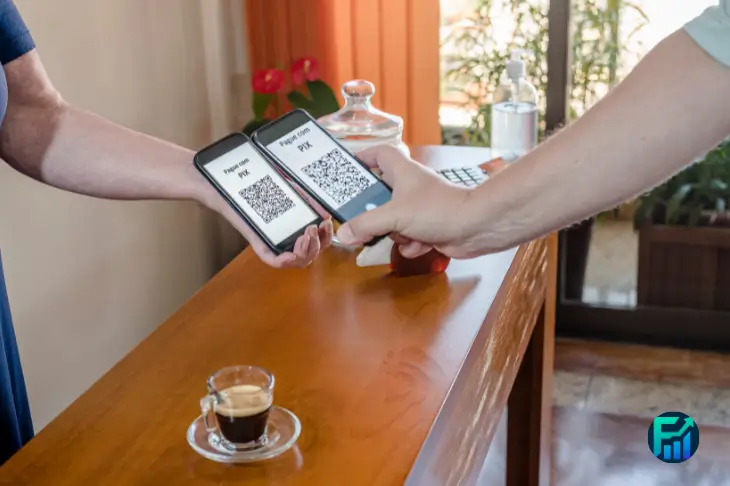
Pix is Brazil’s real-time payment solution, created by the country’s Central Bank to make sending and receiving money fast, easy and available 24/7.
Whether it’s a weekend, holiday or late at night, Brazilians can use Pix to transfer funds instantly.
If you’re used to waiting hours or even days for payments to clear in the U.S., the speed of this system might sound like a dream.
But in Brazil, it’s reality. Since its launch in 2020, Pix has become the preferred method for everything from paying rent to splitting dinner with friends.
It’s not just a tool. It’s a cultural shift in how people handle money.
How Pix Works in Everyday Life
Pix isn’t a separate app. It’s built into nearly every bank and digital wallet in Brazil. To use it, all someone needs is a registered key.
That key might be a phone number, email address, national ID or a random code.
Imagine sending money to a friend. You open your app, choose the feature, enter their key and the amount, then confirm.
The funds are transferred within seconds, regardless of the bank involved.
You can also scan QR codes or pay with contactless options in stores. It’s fast, seamless and widely adopted.
Why It Took Off So Fast
Before the launch of Pix, sending money in Brazil often meant fees, delays and restricted banking hours.
Cash was the default for many people.
This new system changed that. It allowed users to transfer funds anytime, without cost or complexity.
It requires no credit card, no fancy device. Just a smartphone and internet access are enough.
That simplicity helped it spread rapidly across age groups and income levels.
Every Transaction in Seconds
Speed is the core appeal of Pix. Whether paying a bill or sending money to family, it happens instantly.
No pending status. No business-day delays.
Even people in remote areas with basic internet can access the service with ease.
This accessibility helped reduce dependence on physical money and boosted digital adoption.
Security Is Built In
Real-time payments often raise safety concerns. Pix addresses this with multiple layers of protection.
Transfers are encrypted, and users must verify each transaction.
Banks monitor activity and send alerts for anything suspicious. Users can also set daily and hourly limits.
While no system is immune to fraud, this one has earned public trust through solid safeguards.
How It Compares to U.S. Options
Americans use apps like Venmo, Zelle and Cash App, but each has its limits.
Some only work with certain banks. Others delay transfers or charge fees.
Pix, by contrast, is universal within Brazil. It works across all banks and fintechs, instantly and at no cost to personal users.
There’s no need to install extra apps. Everything runs through the user’s regular banking app.
FedNow: The U.S. Response to Systems Like Pix
FedNow is the United States’ first real-time payment infrastructure developed by the Federal Reserve.
Launched in 2023, it aims to provide instant money transfers between banks and financial institutions across the country.
While it shares some similarities with Pix, such as 24/7 availability and immediate settlement, FedNow operates differently.
Adoption is voluntary and mainly targeted at financial entities, meaning consumers don’t interact with it directly, at least not yet.
Unlike Pix, which is fully integrated into everyday banking apps in Brazil and used widely by the population, FedNow is still in its early stages of implementation.
However, it represents an important step toward modernizing payments in the U.S., and could pave the way for broader innovations in the future.
Real-World Examples
Picture a student paying rent. With Pix, the money arrives instantly, even at night.
A local vendor can display a QR code, and customers pay in seconds with their phones.
Government programs also use this system to distribute aid directly and efficiently.
It’s used not only in big cities but in small towns too, reaching millions.
Could Something Like Pix Work in the U.S.?
Technically, yes. The Federal Reserve launched FedNow to offer faster payments between banks.
But in Brazil, adoption of Pix was mandatory. In the U.S., the banking system is more fragmented.
Still, financial leaders are closely watching the Brazilian model as an example of nationwide success.
Driving Financial Inclusion
Pix has helped include people who were previously excluded from banking due to cost, distance or credit restrictions.
Now they can accept payments, send money and even save more easily.
It removes friction from daily transactions and opens the door to broader participation in the economy.
Why It Matters
What makes Pix special isn’t just speed. It’s accessibility, simplicity and scale.
It shows that a public payment system can be efficient without being expensive or complicated.
Many countries are taking notes, and users are asking for similar systems worldwide.
Final Thoughts
Pix transformed how Brazil moves money. It made payments faster, fairer and more inclusive.
The U.S. might not adopt the exact same model, but the inspiration is clear.
When financial tools are designed with people in mind, real progress follows.
This system proves that payment innovation doesn’t have to wait.